The “Perfect Storm” of Constraints
Building a new home in California is never simple. But building an Accessory Dwelling Unit (ADU) in a Wildland-Urban Interface (WUI) zone, while aiming for full electrification and Title 24 compliance, creates a “perfect storm” of constraints.
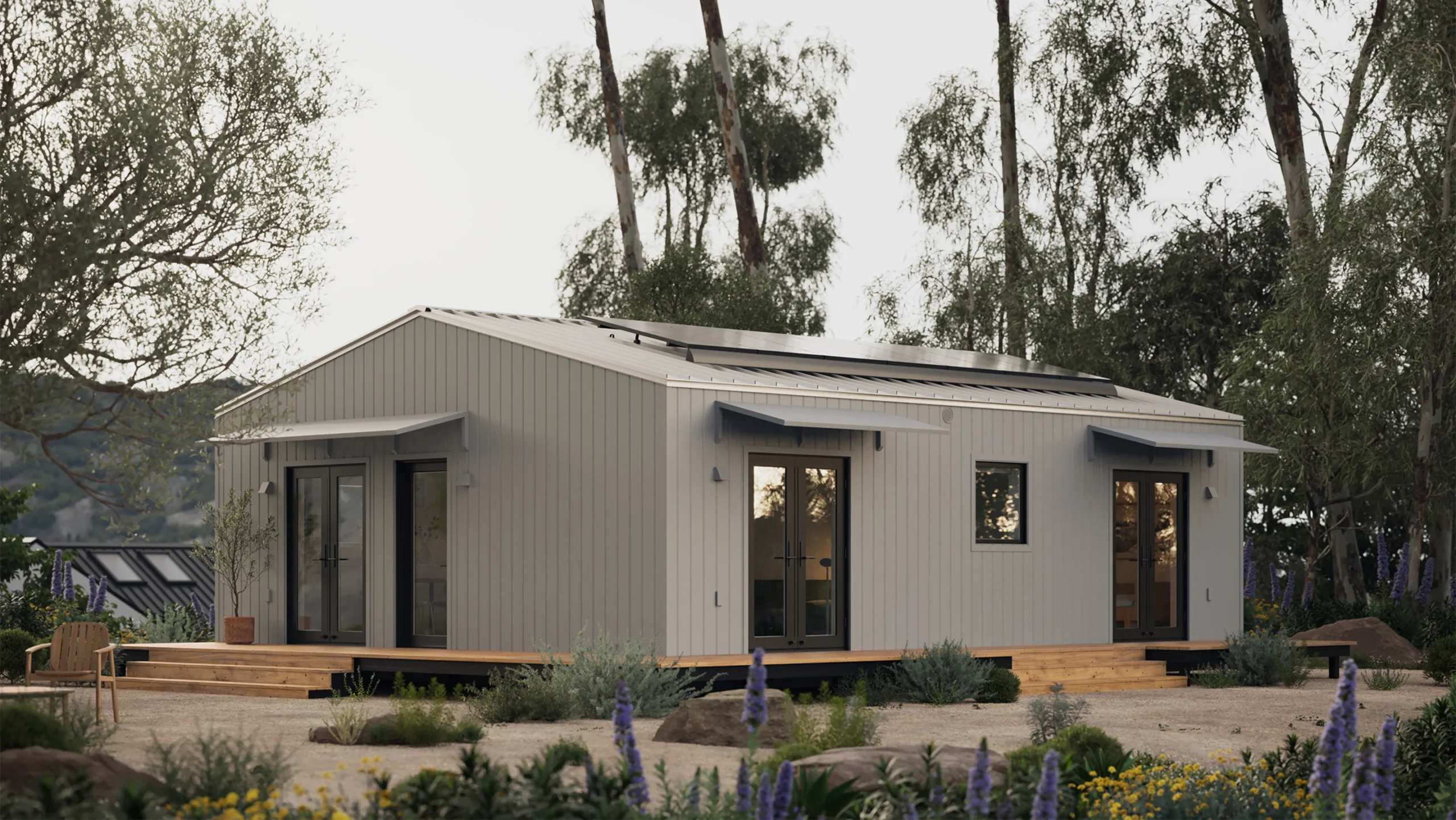
You have strict fire-hardening requirements for the exterior. You have aggressive energy efficiency standards for the envelope. And you have the challenge of fitting a modern, all-electric mechanical suite into a compact footprint without blowing the electrical load calculation.
This project—a 100% electric, passive solar ADU in Lafayette, CA—became our “Living Lab.” It was an opportunity to test Applied Building Science principles in the real world.
The Science: Reducing the Load Before the Equipment Turns On The most efficient heat pump is the one that never has to run. For this project, we prioritized Passive Solar Design to reduce the mechanical load significantly.
- Orientation: We maximized south-facing glazing to harvest free heat in the winter while using calculated overhangs (eaves) to block the high summer sun.
- Envelope: We went beyond code with continuous exterior insulation to break thermal bridges, creating a “thermos” effect that holds temperature for hours.
By treating the architecture as the primary HVAC system, we drastically reduced the tonnage required for the actual heat pump.
The Applied Reality: The All-Electric Suite The goal was to prove that a modern home needs zero gas lines. The mechanical suite features:
- HVAC: A high-efficiency, inverter-driven mini-split heat pump.
- Water Heating: A Heat Pump Water Heater (HPWH) configured with a mixing valve to maximize storage capacity.
- Cooking: A dedicated induction range, eliminating indoor air quality issues associated with gas combustion.
The Result: Resilience and Comfort The result is a structure that is fire-hardened for the WUI and future-proofed for the grid. The electrical load is managed smartly, allowing the unit to run comfortably without requiring a massive industrial-scale electrical service.
This project confirms that Title 24 isn’t just a hurdle—it’s a roadmap to building better, more resilient homes. When we combine smart design with efficient technology, we don’t just meet the code; we set the standard.

10 Comments
Comments are closed.